The Kataragama Temple is much more than a place of worship. It is a unique and sacred site with many layers of history and meaning. The temple reflects the rich religious, cultural, and ethnic heritage of Sri Lanka. Many people recognize it as an important pilgrimage destination. However, its long history, fascinating legends, and the peaceful coexistence of different faiths make it truly remarkable.
A Multi-Faith Sacred Complex
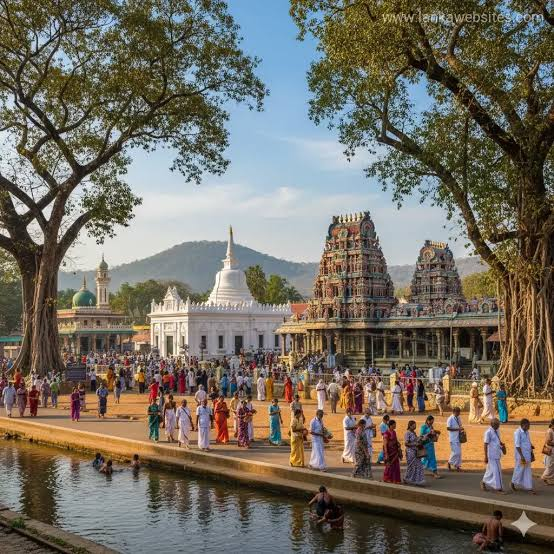
First and foremost, Kataragama does not consist of only one temple. Rather, it includes a collection of shrines situated within a sacred park, and Buddhists, Hindus, Muslims, and members of the indigenous Vedda community all revere the site. As a result, Kataragama has become one of the finest examples of religious coexistence in Sri Lanka.
The Main Shrine (Maha Devale)
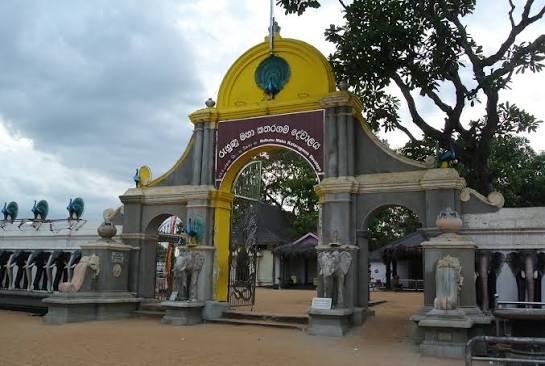
The richly decorated Main Shrine, also known as the Maha Devale, stands at the center of the sacred complex. Hindus worship the central deity as Lord Murugan, the god of war, who is also known as Skanda or Kartikeya. Meanwhile, Buddhists revere the same deity as Kataragama Deviyo, one of the guardian deities of Sri Lanka.
Kiri Vehera
Kiri Vehera, an ancient and impressive white Buddhist stupa, stands at the northern end of the complex. Furthermore, Buddhists regard it as one of the sixteen principal places of pilgrimage in Sri Lanka. According to tradition, many devotees believe that the Buddha himself visited this sacred location.
Other Shrines
In addition to the Main Shrine and Kiri Vehera, the sacred complex contains several other places of worship. These include the Sivam Kovil dedicated to Lord Ganesha, a shrine devoted to the goddess Valli, and the Masjad ul-Khizr mosque, along with several tombs of Muslim holy men.
The administration of the sacred site also reflects this religious diversity. Buddhists manage the Main Shrine and Kiri Vehera, while Hindus manage the shrines dedicated to Shiva, Teyvāṉai, and other Hindu deities.
A Venerable and Contested History
The history of Kataragama remains both ancient and mysterious. In fact, legends surround its origins, and different religious and ethnic communities interpret its history in different ways.
Ancient Roots
The ancient chronicle Mahavamsa first mentioned Kataragama. The text records that dignitaries from a town called Kajjaragama arrived to receive a sacred Bo sapling from India in 288 BCE.
Moreover, some scholars believe that the rituals and practices associated with Kataragama preserve elements of ancient Vedda religious traditions that existed long before Buddhism and Hinduism became established in the region.
Literary References
The first clear literary reference to Kataragama as a sacred place dedicated to Lord Murugan appeared during the 15th century. The famous Tamil poet Arunagirinathar included this reference in his devotional poems and referred to the site by its Tamil name, Kathirkamam.
Integration into Buddhism
Over time, Sinhala Buddhism closely associated the deity with its religious traditions and incorporated him as the guardian deity Skanda-Kumara by at least the 4th century CE. Subsequently, members of the royal family worshipped the deity during the 11th and 12th centuries.
Furthermore, a 16th-century Pali chronicle written in Thailand recorded the earliest known reference to Kataragama as a protector of Sri Lanka.
The Many Legends of Kataragama
Because followers of many religions share Kataragama, they have developed numerous legends to explain the origins of the deity and the significance of the shrine.
Hindu Tradition
According to Hindu belief, Lord Murugan serves as the central deity and symbolizes war and victory. One of the most beloved stories describes his marriage to Valli, a tribal princess. Consequently, festival celebrations continue to highlight this legendary romance as one of their central themes.
Buddhist Tradition
On the other hand, many Sinhala Buddhists believe that the sanctity of Kataragama dates back to the time of the Buddha.
According to one popular legend, King Dutugemunu prayed to the god Kataragama for victory before his battle with King Elara in the 2nd century BCE. After winning the battle, he built a shrine where his arrow landed. Over time, this shrine developed into the present Kataragama Temple.
Another well-known tradition states that King Mahasena built the Kiri Vehera stupa after listening to a sermon delivered by the Buddha at this location.
Vedda and Other Traditions
Meanwhile, the indigenous Vedda people regard the deity as one of their own and call him “O’ Vedda,” meaning “river hunter.” They strongly believe that the shrine stands on their ancestral lands and forms an important part of their cultural heritage.
Additionally, some Sinhala legends suggest that the deity may originally have been a historical figure, such as a Tamil spy or a skilled juggler, who later achieved divine status. These diverse stories illustrate the complex and layered identity of Kataragama.
The Kataragama Experience and Festival
For many devotees, a pilgrimage to Kataragama represents not merely a visit but a deeply spiritual journey that involves rituals, purification, and devotion.
Ritual Bathing
Traditionally, pilgrims begin their journey by bathing in the Menik Ganga, also known as the “River of Gems.” This ritual cleansing symbolizes spiritual purification before devotees enter the sacred shrines.
The Esala Festival
Without doubt, the annual Esala Festival remains the most important event associated with Kataragama and takes place during July and August each year.
The festival celebrates the courtship and marriage of Lord Murugan and the Vedda princess Valli. During the celebrations, devotees witness fifteen nights of magnificent processions known as Peraheras. During which attendants carry the sacred casket of the deity through the streets on the back of a beautifully decorated elephant.
Finally, the festival concludes with the famous water-cutting ceremony in the Menik Ganga. Thousands of devotees from different religious backgrounds gather to witness this sacred event while chanting “Haro Hara” and “Sadu.”
A Modern Symbol of Unity and Tension
Today, Kataragama stands as a powerful symbol of religious harmony and cultural coexistence. People from many faiths visit the shrine. They seek blessings, healing, and spiritual guidance.
Nevertheless, modern political and religious developments have created tensions. Some scholars describe the growing Buddhist influence as “Buddhicization.” Consequently, some members of the Hindu Tamil community have expressed concerns. They worry about changes to the identity of the site.
Despite these challenges, Kataragama remains a vibrant example of Sri Lanka’s syncretic heritage. Multiple traditions continue to coexist within this shared sacred space.
Conclusion
The Kataragama Temple is more than a religious monument. It shows centuries of history, faith, and culture. It also reflects peaceful coexistence among different communities.
The temple has many sacred shrines. It also has ancient legends and vibrant festivals. People from different countries visit this site.
Kataragama inspires many visitors around the world. It is a symbol of unity in diversity. It remains one of Sri Lanka’s most important spiritual landmarks.